 Health is the greatest gift, contentment the greatest wealth, faithfulness the best relationship ~ Buddha

Sunday, October 22, 2006


Tuesday, September 19, 2006
Thursday, September 14, 2006
 In the sky, there is no distinction of east and west; people create distinctions out of their own minds and then believe them to be true.
 Monday, September 11, 2006

Friday, September 08, 2006
Thursday, September 07, 2006

Wednesday, September 06, 2006

Tuesday, September 05, 2006

Monday, September 04, 2006

Saturday, September 02, 2006
Friday, September 01, 2006
Thursday, August 31, 2006
Tuesday, August 29, 2006
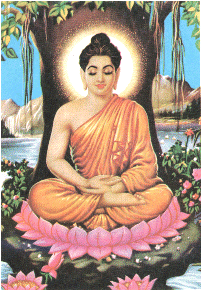
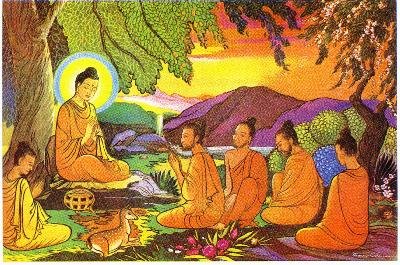
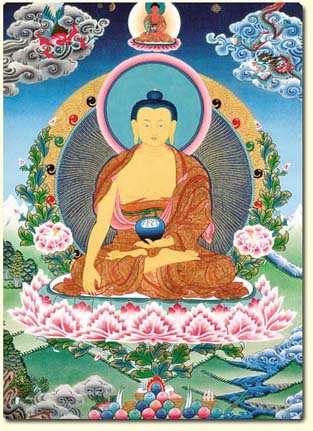 The Buddha was born Siddhartha Gautama, a prince of the Sakya tribe of Nepal, in approximately 566 BC. When he was twentynine years old, he left the comforts of his home to seek the meaning of the suffering he saw around him. After six years of arduous yogic training, he abandoned the way of self-mortification and instead sat in mindful meditation beneath a bodhi tree.
 On the full moon of May, with the rising of the morning star, Siddhartha Gautama became the Buddha, the enlightened one.
The Buddha wandered the plains of northeastern India for 45 years more, teaching the path or Dharma he had realized in that moment. Around him developed a community or Sangha of monks and, later, nuns, drawn from every tribe and caste, devoted to practicing this path. In approximately 486 BC, at the age of 80, the Buddha died. His last words are said to be...
Impermanent are all created things;
Strive on with awareness.
Wednesday, June 21, 2006

Sunday, June 18, 2006

Thursday, June 15, 2006
Wednesday, June 14, 2006

Tuesday, June 13, 2006

Monday, June 12, 2006
Saturday, June 10, 2006

to Buddhist Women
From a message sent by His Holiness to the fourth International Conference of Buddhist Women, held in Ladakh, August 1995. (Reprinted from Sakyadita, the magazine of the International Association of Buddhist Women, Spring, 1996.)
Converting other people to Buddhism is not my concern. I am interested in how we Buddhists can contribute to human society. The Buddha gave us an example of contentment and tolerance, through serving others unselfishly. I believe that his teaching and example can still contribute to global peace and individual happiness.
The Buddha was born an ordinary person like ourselves. But after observing the suffering of human beings, that they grow old, fall sick and die, he totally renounced the worldly way of life in his determination to find a solution. Having undertaken severe physical penances, he purified and illumined his mind through intense meditation and attained supreme enlightenment. He showed that purifying the mind is not easy. It takes a lot of time and hard work. But this is also true of any human enterprise. You need tremendous will-power and determination right from the start, accepting that there will be many obstacles, and resolving that despite them all you will continue until you have attained your goal.
Moved by a spontaneous concern to help others, the Buddha spent the rest of his life as a homeless monk, sharing his experience with everyone who wished to listen. Both the view of dependent arising and his advice not to harm anyone, but to help whoever you can, emphasize the practice of nonviolence. This remains one of the most potent forces for good in the world today, for nonviolence means to be of service to our fellow beings.
It is the nature of human beings to yearn for freedom, equality and dignity. If we accept that others have a right to peace and happiness equal to our own, do we not have a responsibility to help those in need? All human beings, whatever their cultural or historical background, suffer when they are intimidated, imprisoned, tortured or discriminated against. The question of human rights is so fundamentally important that there should be no difference of views on this.
Our rich diversity of cultures and tradition should help to strengthen fundamental human rights in all communities. Mere tradition can never justify violations of human rights. Thus, discrimination against persons of a different race, against women, and against weaker sections of society may be traditional in some places, but because they are inconsistent with universally recognized human rights, these forms of behaviour should change. The universal principle of the equality of all human beings must take precedence.
Whenever Buddhism has taken root in a new land there has always been a certain variation in the style in which it is observed. This evolves over time. The Buddha himself taught different things according to the place, the occasion and the situation of those who were listening to him. What distinguishes the contemporary situation is that almost the entire array of Buddhist traditions that evolved in different lands are now accessible to anyone who is interested. Especially heartening is that Buddhist women are casting off traditional and outmoded restraints and dedicating themselves to implementing and promoting Buddhist practice.
Peaceful living is about trusting those on whom we depend and caring for those who depend on us. Even if only a few individuals try to create mental peace and happiness within themselves and act responsibly and kind-heartedly towards others, they will have a positive influence in their community. As well as being equally capable, women have an equal responsibility to do this.
Remembering the kind influence of my own mother, I pray that women working for inner peace and, through that, peace in the world, may be blessed with success.
Friday, June 09, 2006
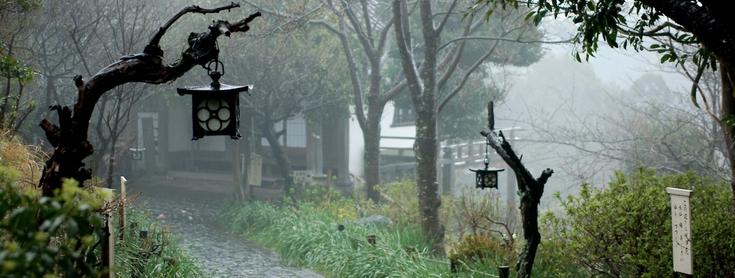 Quotes from The Dalai Lama
Happiness:
If you want others to be happy, practice compassion. If you want to be happy, practice compassion.
Kindness:
In the practice of tolerance, one's enemy is the best teacher.
Helping:
Our prime purpose in this life is to help others. And if you can't help them, at least don't hurt them.
Appreciation:
The roots of all goodness lie in the soil of appreciation for goodness.
Kindness:
The various features and aspects of human life, such as longevity, good health, success, happiness, and so forth, which we consider desirable, are all dependent on kindness and a good heart.
Religion:
This is my simple religion. There is no need for temples; no need for complicated philosophy. Our own brain, our own heart is our temple; the philosophy is kindness.
Thursday, June 08, 2006
Tuesday, June 06, 2006

Monday, June 05, 2006
Friday, June 02, 2006

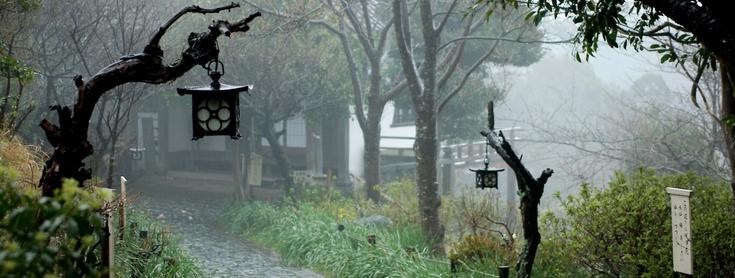
The basic sources of happiness are a good heart, compassion, and love. If we have these mental attitudes, even if we are surrounded by hostility, we feel little disturbance. On the other hand, if we lack compassion and our mental state is filled with anger or hatred we will not have peace.
-His Holiness The Dalai Lama
Thursday, June 01, 2006
Wednesday, May 31, 2006
Tuesday, May 30, 2006
Monday, May 29, 2006
The Dalai Lama's Letter To President Bush After 9/11
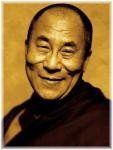 September 12, 2001
His Excellency Mr. George W. Bush
The President
The White House
Washington, DC 20500
U.S.A.
Your Excellency,
I am deeply shocked by the terrorist attacks that took place involving four apparently hijacked aircrafts and the immense devastation these caused. It is a terrible tragedy that so many innocent lives have been lost and it seems unbelievable that anyone would choose to target the World Trade Center in New York City and the Pentagon in Washington, D.C. We are deeply saddened. On behalf of the Tibetan people I would like to convey our deepest condolence and solidarity with the American people during this painful time. Our prayers go out to the many who have lost their lives, those who have been injured and the many more who have been traumatized by this senseless act of violence. I am attending a special prayer for the United States and its people at our main temple today.
I am confident that the United States as a great and powerful nation will be able to overcome this present tragedy. The American people have shown their resilience, courage and determination when faced with such difficult and sad situations.
It may seem presumptuous on my part, but I personally believe we need to think seriously whether a violent reaction is the right thing to do and in the greater interest of the nation and people in the long run. I believe violence will only increase the cycle of violence. But how do we deal with hatred and anger which are often the root causes of such senseless violence? This is a very difficult question, especially when it concerns a nation and we have certain fixed conceptions of how to deal with such attacks. I am sure you will make the right decision.
With my prayers and good wishes,
Yours sincerely,
The Dalai Lama
Thursday, May 25, 2006
Wednesday, May 24, 2006

Tuesday, May 23, 2006

Sunday, May 21, 2006

Saturday, May 20, 2006
Thursday, May 18, 2006
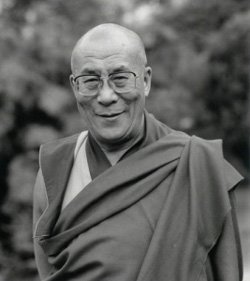 In our daily lives problems are bound to arise. The biggest problems in our lives are the ones that we inevitably have to face, like old age, illness, and death. Trying to avoid our problems or simply not thinking about them may provide temporary relief, but I think that there is a better approach. If you directly confront your suffering, you will be in a better position to appreciate the depth and nature of the problem. If you are in a battle, as long as you remain ignorant of the status and combat capability of your enemy, you will be totally unprepared and paralyzed by fear. However, if you know the fighting capability of your opponents, what sort of weapons they have and so on, then you're in a much better position when you engage in war. In the same way, if you confront your problems rather than avoid them, you will be in a better position to deal with them.
-His Holiness the Dalai Lama
Wednesday, May 17, 2006
 I would like to explain the meaning of compassion, which is often misunderstood. Genuine compassion is based not on our own projections and expectations, but rather on the rights of the other: irrespective of whether another person is a close friend or an enemy, as long as that person wishes for peace and happiness and wishes to overcome suffering, then on that basis we develop genuine concern for his or her problem. This is genuine compassion. Usually when we are concerned about a close friend, we call this compassion. This is not compassion; it is attachment. Even in marriage, those marriages that last only a short time do so because of attachment - although it is generally present - but because there is also compassion. Marriages that last only a short time do so because of a lack of compassion; there is only emotional attachment based on projection and expectation. When the only bond between close friends is attachment, then even a minor issue may cause one's projections to change. As soon as our projections change, the attachment disappears - because that attachment was based solely on projection and expectation. It is possible to have compassion without attachment - and similarly, to have anger without hatred. Therefore we need to clarify the distinctions between compassion and attachment, and between anger and hatred. Such clarity is useful in our daily life and in our efforts towards world peace. I consider these to be basic spiritual values for the happiness of all human beings, regardless of whether one is a believer or a nonbeliever.
-His Holiness the Dalai Lama
Tuesday, May 16, 2006
Monday, May 15, 2006
 My message is the practice of compassion, love and kindness. Compassion can be put into practice if one recognizes the fact that every human being is a member of humanity and the human family regardless of differences in religion, culture, color and creed. Deep down there is no difference.
-His Holiness the Dalai Lama
Sunday, May 14, 2006
Saturday, May 13, 2006

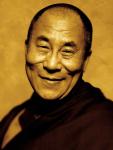
Nowadays the world is becoming increasingly materialistic, and mankind is reaching toward the very zenith of external progress, driven by an insatiable desire for power and vast possessions. Yet by this vain striving for perfection in a world where everything is relative, they wander even further away from inward peace and happiness of the mind.
-His Holiness the Dalai Lama
-His Holiness the Dalai Lama
Friday, May 12, 2006
Wednesday, May 10, 2006
Tuesday, May 09, 2006

Monday, May 08, 2006

A new way of thinking has become the necessary condition for responsible living and acting. If we maintain obsolete values and beliefs, a fragmented consciousness and self-centered spirit, we will continue to hold onto outdated goals and behaviors. Such an attitude by a large number of people would block the entire transition to an interdependent yet peaceful and cooperative global society.
-His Holiness the Dalai Lama
-His Holiness the Dalai Lama
Friday, May 05, 2006
Wednesday, May 03, 2006

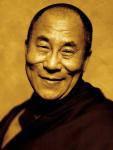
I believe that the very purpose of our life is to seek happiness. That is clear. Whether one believes in religion or not, whether one believes in this religion or that religion, we all are seeking something better in life. So, I think, the very motion of our life is towards happiness.
-His Holiness the Dalai Lama
-His Holiness the Dalai Lama
Tuesday, May 02, 2006
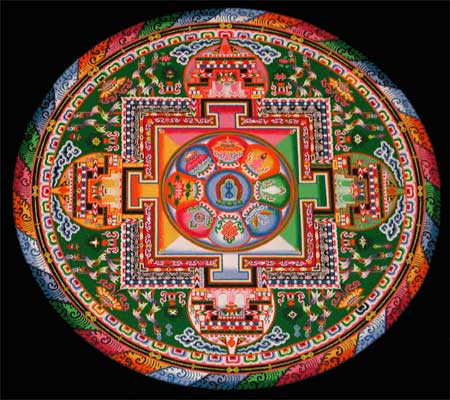
Each of us in our own way can try to spread compassion into people's hearts. Western civilizations these days place great importance on filling the human "brain" with knowledge, but no one seems to care about filling the human "heart" with compassion. This is what the real role of religion is.
-His Holiness the Dalai Lama
-His Holiness the Dalai Lama
Monday, May 01, 2006


I believe that the very purpose of life is to be happy. From the very core of our being, we desire contentment. In my own limited experience I have found that the more we care for the happiness of others, the greater is our own sense of well-being. Cultivating a close, warmhearted feeling for others automatically puts the mind at ease. It helps remove whatever fears or insecurities we may have and gives us the strength to cope with any obstacles we encounter. It is the principal source of success in life. Since we are not solely material creatures, it is a mistake to place all our hopes for happiness on external development alone. The key is to develop inner peace.
-His Holiness the Dalai Lama
-His Holiness the Dalai Lama
Subscribe to:
Posts (Atom)