Greetings from His Holiness the Dalai Lama to Buddhist Women
From a message sent by His Holiness to the fourth International Conference of Buddhist Women, held in Ladakh, August 1995. (Reprinted from Sakyadita, the magazine of the International Association of Buddhist Women, Spring, 1996.)
Converting other people to Buddhism is not my concern. I am interested in how we Buddhists can contribute to human society. The Buddha gave us an example of contentment and tolerance, through serving others unselfishly. I believe that his teaching and example can still contribute to global peace and individual happiness.
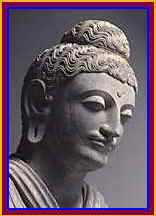
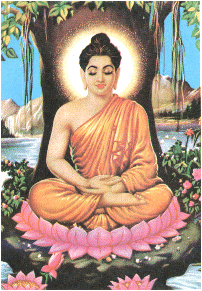
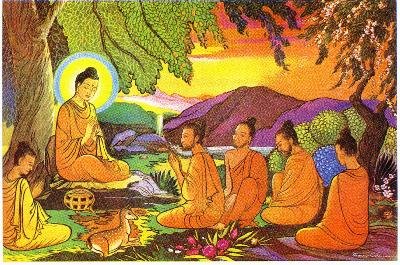
The Buddha was born an ordinary person like ourselves. But after observing the suffering of human beings, that they grow old, fall sick and die, he totally renounced the worldly way of life in his determination to find a solution. Having undertaken severe physical penances, he purified and illumined his mind through intense meditation and attained supreme enlightenment. He showed that purifying the mind is not easy. It takes a lot of time and hard work. But this is also true of any human enterprise. You need tremendous will-power and determination right from the start, accepting that there will be many obstacles, and resolving that despite them all you will continue until you have attained your goal.
Moved by a spontaneous concern to help others, the Buddha spent the rest of his life as a homeless monk, sharing his experience with everyone who wished to listen. Both the view of dependent arising and his advice not to harm anyone, but to help whoever you can, emphasize the practice of nonviolence. This remains one of the most potent forces for good in the world today, for nonviolence means to be of service to our fellow beings.
It is the nature of human beings to yearn for freedom, equality and dignity. If we accept that others have a right to peace and happiness equal to our own, do we not have a responsibility to help those in need? All human beings, whatever their cultural or historical background, suffer when they are intimidated, imprisoned, tortured or discriminated against. The question of human rights is so fundamentally important that there should be no difference of views on this.
Our rich diversity of cultures and tradition should help to strengthen fundamental human rights in all communities. Mere tradition can never justify violations of human rights. Thus, discrimination against persons of a different race, against women, and against weaker sections of society may be traditional in some places, but because they are inconsistent with universally recognized human rights, these forms of behaviour should change. The universal principle of the equality of all human beings must take precedence.
Whenever Buddhism has taken root in a new land there has always been a certain variation in the style in which it is observed. This evolves over time. The Buddha himself taught different things according to the place, the occasion and the situation of those who were listening to him. What distinguishes the contemporary situation is that almost the entire array of Buddhist traditions that evolved in different lands are now accessible to anyone who is interested. Especially heartening is that Buddhist women are casting off traditional and outmoded restraints and dedicating themselves to implementing and promoting Buddhist practice.
Peaceful living is about trusting those on whom we depend and caring for those who depend on us. Even if only a few individuals try to create mental peace and happiness within themselves and act responsibly and kind-heartedly towards others, they will have a positive influence in their community. As well as being equally capable, women have an equal responsibility to do this.
Remembering the kind influence of my own mother, I pray that women working for inner peace and, through that, peace in the world, may be blessed with success.


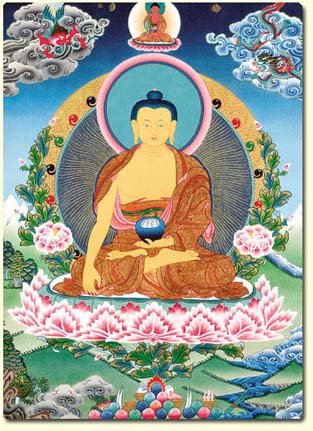 The Buddha was born Siddhartha Gautama, a prince of the Sakya tribe of Nepal, in approximately 566 BC. When he was twentynine years old, he left the comforts of his home to seek the meaning of the suffering he saw around him. After six years of arduous yogic training, he abandoned the way of self-mortification and instead sat in mindful meditation beneath a bodhi tree.

 Quotes from The Dalai Lama